
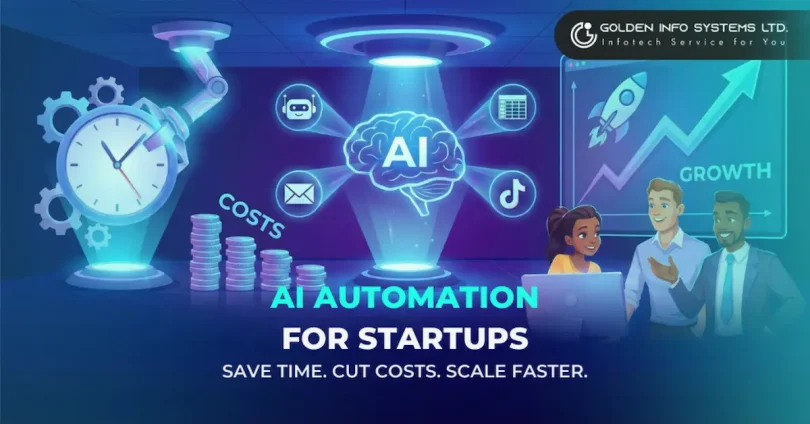

AI automation is rapidly transforming how startups operate, allowing small teams to achieve big results with minimal resources. By automating repetitive tasks and using intelligent systems to make decisions, startups can save time, reduce costs, and focus on strategic growth. ai automation for startups
For early-stage companies, every minute and dollar counts. AI automation enables startups to scale quickly, handle increasing workloads, and compete with larger organizations without hiring large teams. From customer support to marketing, sales, and operations, AI tools can streamline processes and provide valuable insights that drive smarter business decisions.
In this guide, we’ll explore what AI automation is, why it’s essential for startups, key areas where it can be applied, practical steps to implement it, and best practices to ensure success. By understanding these fundamentals, startups can harness AI to work smarter, grow faster, and stay ahead in today’s competitive market. ai automation for startups
What Is AI Automation?
AI automation is the use of artificial intelligence (AI) to automate tasks, workflows, and decision-making processes that normally require human effort. Unlike traditional automation, which follows fixed, pre-set rules, AI automation can learn from data, adapt to new patterns, and improve its performance over time. This makes it smarter, more flexible, and ideal for startups that need to scale quickly with limited resources.
How AI Automation Works
- Data Collection: AI gathers data from multiple sources such as customer interactions, website activity, sales records, social media, and operational systems.
- Analysis and Learning: AI algorithms identify patterns, trends, and anomalies in the data to make predictions or guide decisions.
- Action: The AI system executes tasks automatically, such as responding to customer inquiries, sending personalized emails, or updating databases.
- Continuous Improvement: AI systems learn from feedback and new data, improving accuracy and efficiency over time without requiring manual adjustments.
Key Types of AI Automation
- Robotic Process Automation (RPA) + AI: Automates repetitive tasks like data entry, invoice processing, or report generation with intelligent decision-making.
- Predictive Analytics: Uses historical data to forecast trends, sales, or customer behavior for better planning.
- Natural Language Processing (NLP): Powers chatbots, customer support systems, and content analysis by understanding human language.
- Machine Learning Models: Continuously improve predictions or actions, such as recommending products or detecting anomalies in financial transactions.
Examples of AI Automation in Startups
- Customer Support: AI chatbots handle 24/7 customer queries, troubleshoot common issues, and escalate complex problems to humans.
- Marketing: AI automates personalized email campaigns, social media scheduling, A/B testing, and analytics for better targeting.
- Sales: AI scores leads, predicts customer interest, automates follow-ups, and updates CRM systems.
- Operations: Automates inventory management, workflow approvals, supply chain optimization, and internal reporting.
- Finance: Processes invoices, tracks expenses, reconciles accounts, and flags potential fraud in real time.
- HR & Recruitment: Screens resumes, ranks candidates, automates onboarding, and tracks employee performance.
Why AI Automation Matters for Startups
- Saves Time: Handles repetitive and time-consuming tasks automatically.
- Reduces Costs: Fewer manual processes mean lower operational costs and resource needs.
- Increases Accuracy: Reduces human errors in data entry, calculations, and decision-making.
- Scales Operations: Allows startups to grow without proportionally increasing staff.
- Supports Data-Driven Decisions: AI provides insights and recommendations that help founders and teams make smarter choices.
- Improves Customer Experience: Faster response times, personalized interactions, and reliable service.
In essence, AI automation empowers startups to do more with less, streamline operations, and focus on growth, innovation, and strategic decision-making. It turns small teams into highly efficient operations capable of competing with much larger companies.
you may also like to read these posts;
Product Growth Analytics Tools: Boost Engagement & Revenue
How to Build a Data Driven Growth Strategy
Marketing Performance Analytics Guide for Beginners
Customer Growth Data Analysis: Track, Analyze, Grow
Growth Analytics for Startups: Key Metrics & Tools
Why Startups Need AI Automation
AI automation is a game-changer for startups because it allows small teams to operate efficiently, save money, and scale rapidly. Startups often face limited resources, tight budgets, and the pressure to grow quickly, making automation an essential tool for success.
1. Save Time and Boost Productivity
Startups typically have small teams juggling multiple roles. AI automation takes over repetitive and time-consuming tasks such as data entry, invoice processing, social media scheduling, and email follow-ups. This allows employees to focus on strategic, creative, and revenue-generating work.
Example: An AI tool can automatically schedule and optimize social media posts, freeing a marketing manager to focus on campaign strategy. ai automation for startups
2. Reduce Operational Costs
Manual processes require human labor, which can be expensive for early-stage startups. AI automation reduces the need for large teams, cuts errors, and streamlines workflows, saving both time and money.
Example: Automating bookkeeping or expense tracking with AI reduces manual work and lowers accounting costs.
3. Scale Quickly Without Hiring Extra Staff
AI systems can manage growing workloads without the need for additional hires. This is critical for startups that want to expand quickly while keeping overhead low. ai automation for startups
Example: A customer support chatbot can handle thousands of inquiries simultaneously, something that would require a full support team.
4. Enhance Customer Experience
AI automation improves service quality and response times. Personalized recommendations, quick answers to queries, and consistent communication build stronger customer relationships and loyalty. ai automation for startups
Example: E-commerce startups can use AI to recommend products based on customer browsing and purchase history.
5. Gain a Competitive Advantage
Startups leveraging AI can make faster, data-driven decisions, optimize workflows, and adapt to market trends more quickly than competitors who rely solely on manual processes. Early adoption of AI can provide a significant edge in the market.
6. Improve Accuracy and Reduce Human Error
Manual processes are prone to mistakes, which can affect finances, customer satisfaction, and operational efficiency. AI systems ensure consistent, accurate performance, reducing errors and increasing reliability. ai automation for startups
7. Enable Data-Driven Decision Making
AI automation can analyze vast amounts of data to uncover patterns, forecast trends, and provide actionable insights. Startups can use these insights to optimize marketing campaigns, product development, sales strategies, and operational planning. ai automation for startups
8. Free Up Resources for Innovation
By automating routine tasks, startups can allocate time and resources toward innovation, product development, and strategic initiatives, which are key drivers for long-term growth. ai automation for startups
9. Support Remote and Lean Teams
Many startups operate with remote or lean teams. AI automation allows distributed teams to work efficiently without constant supervision, ensuring processes run smoothly even with minimal staff. ai automation for startups
10. Build a Future-Ready Organization
Implementing AI automation early prepares startups for future growth and technological advancements. A startup that embraces AI is better equipped to scale, adapt, and innovate in a competitive market. ai automation for startups
In summary, AI automation empowers startups to work smarter, scale faster, reduce costs, and focus on high-value tasks. It transforms limited resources into maximum efficiency, giving startups the tools to compete effectively and grow sustainably. ai automation for startups
Key Areas for AI Automation in Startups

AI automation can transform the way startups operate by streamlining tasks, improving efficiency, and supporting growth. Here’s a deeper look at the key areas where startups can apply AI automation for maximum impact: ai automation for startups
1. Customer Support
AI-powered chatbots and virtual assistants can handle thousands of customer queries simultaneously, providing instant answers to common questions and routing complex issues to human agents. This ensures round-the-clock support without hiring a large team.
Example: A chatbot can handle product inquiries, provide order updates, and offer personalized suggestions based on customer behavior. ai automation for startups
2. Marketing Automation
AI tools can optimize campaigns, schedule posts, analyze engagement, and personalize messaging. They can segment customers based on behavior, predict trends, and automate repetitive marketing tasks to boost efficiency.
Example: An AI system can automatically send personalized email offers to customers likely to make a purchase, increasing conversion rates. ai automation for startups
3. Sales Automation
AI helps startups manage leads, predict buying behavior, automate follow-ups, and update CRM systems. This allows small sales teams to focus on high-value prospects and improve conversion rates.
Example: Predictive analytics can identify which leads are most likely to buy, enabling the sales team to prioritize efforts strategically. ai automation for startups
4. Operations & Workflow Management
AI can streamline repetitive processes like data entry, report generation, scheduling, and inventory management. Automation reduces errors, ensures consistency, and allows teams to focus on strategic tasks. ai automation for startups
Example: An AI-powered tool can track inventory levels and automatically trigger restocking, saving time and reducing stockouts.
5. Finance & Accounting
AI automates invoicing, expense tracking, payroll, and fraud detection. This reduces human error, speeds up financial workflows, and ensures compliance. ai automation for startups
Example: AI can detect unusual transactions or spending patterns, helping prevent fraud and optimize cash flow management.
6. Human Resources & Recruitment
AI helps streamline HR tasks such as resume screening, candidate ranking, interview scheduling, and employee performance analysis. This saves time and improves hiring accuracy. ai automation for startups
Example: An AI recruitment platform can match candidates to roles based on qualifications, experience, and previous hiring data.
7. Product Development & Analytics
AI can analyze user behavior, product performance, and market trends to guide product development decisions. Startups can innovate faster by understanding what features or products are likely to succeed. ai automation for startups
Example: AI tools can analyze app usage data to recommend new features that users are most likely to engage with. ai automation for startups
8. Predictive Decision-Making
AI provides predictive insights that help startups anticipate trends, demand, or risks, enabling proactive decision-making rather than reactive responses. ai automation for startups
Example: AI can forecast customer churn, sales demand, or website traffic trends, helping startups plan resources effectively. ai automation for startups
9. Supply Chain & Inventory Management
Startups dealing with physical products can use AI to optimize inventory, forecast demand, manage suppliers, and automate restocking processes, ensuring smooth operations with minimal errors. ai automation for startups
Example: AI predicts which products will sell faster during certain seasons and adjusts inventory orders accordingly.
10. Customer Engagement & Personalization
AI automation allows startups to personalize user experiences at scale. From personalized recommendations to targeted marketing campaigns, AI enhances engagement and loyalty. ai automation for startups
Example: An e-commerce startup can use AI to recommend products based on previous purchases and browsing behavior, increasing sales and retention.
In summary, AI automation for startups spans customer support, marketing, sales, operations, finance, HR, product development, predictive decision-making, supply chain, and personalized engagement. By focusing on these areas, startups can optimize resources, reduce costs, improve efficiency, and scale faster without needing large teams. ai automation for startups
What is AI automation for startups?
AI automation uses artificial intelligence to perform tasks that normally require human effort. It can handle repetitive processes, analyze data, and even make decisions, helping startups save time and scale efficiently.
Can small startups afford AI automation?
Yes. Many AI tools and platforms are affordable and cloud-based, designed for small businesses and startups. You can start with simple automation projects and scale gradually as your budget and needs grow.
Which processes should startups automate first?
Start with repetitive, time-consuming tasks that don’t require complex decision-making. Examples include customer support (chatbots), email marketing, lead scoring, invoice processing, and data entry.
Conclusion
AI automation is a powerful tool for startups, enabling small teams to work smarter, save time, reduce costs, and scale quickly. By automating repetitive tasks, analyzing data, and providing actionable insights, AI allows startups to focus on growth, innovation, and strategic decision-making.
Startups can apply AI automation across customer support, marketing, sales, operations, finance, HR, and product development, improving efficiency and enhancing customer experiences. Even with limited resources, small teams can leverage affordable AI tools to compete with larger organizations and stay ahead in a competitive market.
The key to success is to start small, prioritize high-impact processes, and scale gradually. By implementing AI automation thoughtfully and continuously refining workflows, startups can unlock new opportunities, optimize operations, and build a strong foundation for long-term growth.
In short, AI automation helps startups turn limited resources into maximum efficiency, giving them the tools to grow faster, make smarter decisions, and compete effectively in today’s fast-paced business world.


